Notes from Marty B.

What it’s actually like to run for, and serve on, Park Hills City Council. I’m keeping these notes so anyone thinking about running in the future has a clearer picture of the process.

What matters most to you? A different kind of survey
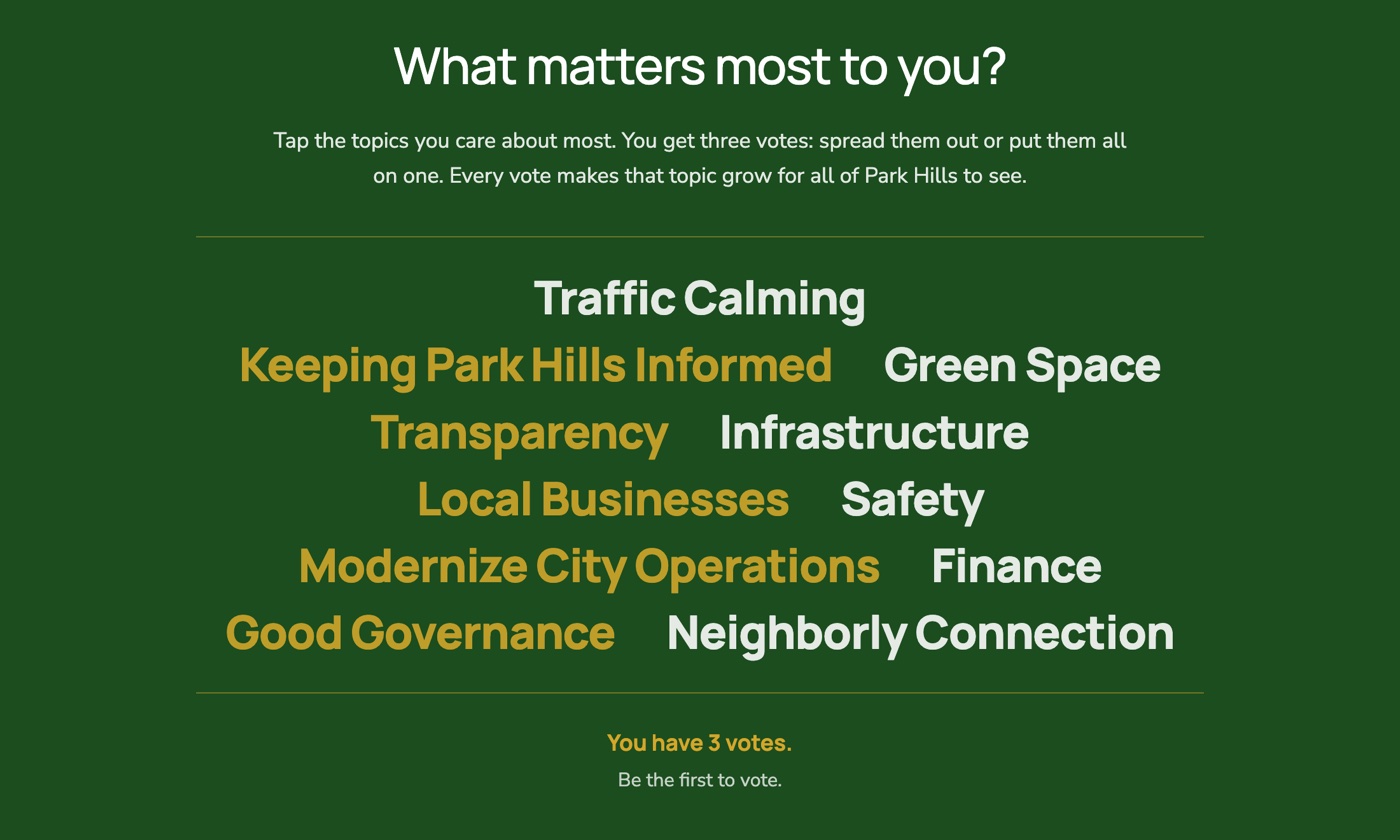
The word cloud on the home page: eleven Park Hills topics, from Traffic Calming and Green Space to Transparency and Good Governance, under the heading What matters most to you?

Before I’m sworn in on December 14, I want to hear from you. Most surveys are long, and most people never finish them. So I tried something quicker: a word cloud on the home page where you can tell me what matters most to you in about ten seconds.

How it works

  1. Go to What matters most to you? on the home page. It works on your phone.
  2. Tap the topics you care about. You get three votes. Spread them across three topics, or put all three on the one that matters most.
  3. Watch it grow. Every vote makes that topic bigger for everyone who visits, and the running total shows how many neighbors have weighed in.

No sign-up, no name, no email.

Why I’m doing this

My platform came from analyzing 107 council meetings (here’s how). That told me what’s been said at council over the years. It doesn’t tell me what’s on the minds of residents who can’t make it to a council meeting. This is one easy way to hear from more of you.

Keeping residents informed has to go both ways. It starts with listening. And because everyone sees the same live results, nothing is hidden: you see exactly what I see.

This is also one of the “useful tools for residents” I mentioned in my last note. More to come.

What I’ll do with it

I’ll share what the results show in a future note, and use them to help decide where to focus first when I take my seat in January.

To be clear, this isn’t a scientific poll. It’s a pulse check. Someone using several devices could vote more than once, and that’s OK. The point is to get a feel for what Park Hills cares about.

Don’t see a topic that matters to you? Email me at voteformartyb@gmail.com. I read every message.
So what happens after you’re elected?

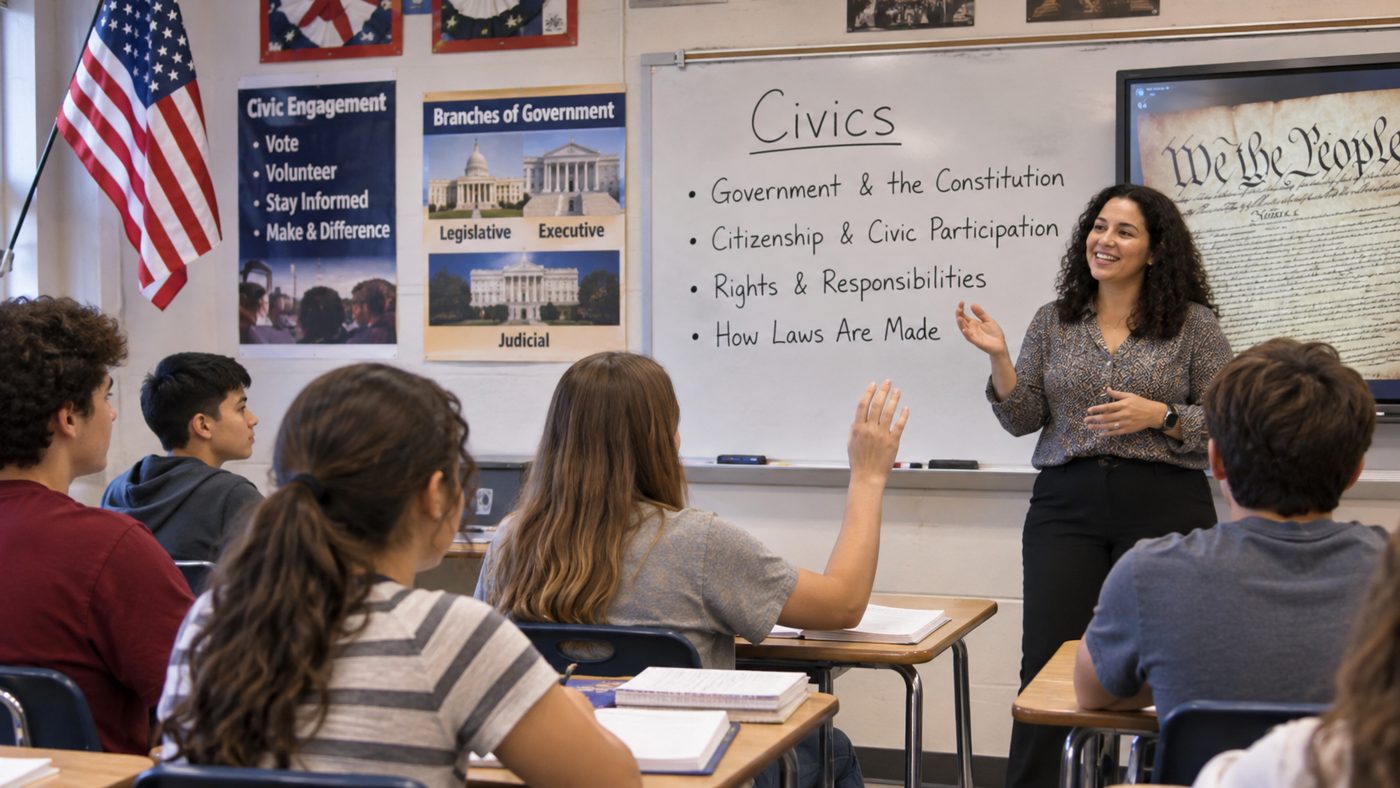
A teacher leading a civics class, with topics like government, citizenship, and how laws are made on the whiteboard

The shortest way I can put it: it’s like starting a new job. There’s an onboarding period, and a bit of civics class.

Here’s what the next couple of months look like:

  • Closing out the campaign. Filing my final campaign finance statements with the Kentucky Registry of Election Finance (KREF).
  • Debriefing. Looking back at the campaign to see what worked and what I’d do differently.
  • Updating this website. Keeping an online presence as a council member, and hopefully adding a few useful tools for residents.
  • City onboarding. The City of Park Hills has started the administrative side: name badges, scheduling trainings, and more.
  • Swearing in. We’ll be sworn in on December 14.
  • Council orientation. Each of us will attend an orientation with the Kentucky League of Cities in December.
  • City Officials Academy. In January, I’ll attend the Kentucky League of Cities’ two-and-a-half-day City Officials Academy in Lexington.

Let’s meet

I’m planning another meet-and-greet this November. December is busy with the holidays, so that one is still TBD and may be online.

Demystifying the process

One of my goals is to keep notes along the way, so anyone thinking about running in the future has a clearer picture of what it actually involves.

Preparing To Run for Council

From the campaign

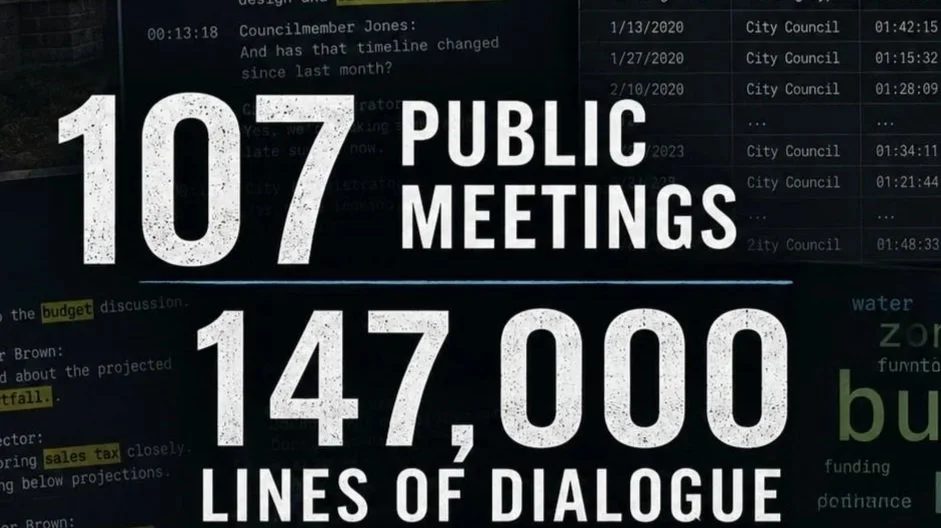
107 public meetings, 147,000 lines of dialogue

Before deciding to run, I wanted to do something most candidates probably don’t: understand where I could actually add value. Not where I had opinions — where my skills and experience could genuinely complement the needs of the city.

So I started with analysis, not politics.

I downloaded and transcribed 107 archived Park Hills council meetings — roughly 147,000 lines of dialogue — and used AI to analyze long-term patterns in governance, communication, operations, and community priorities. Then I uploaded my own background to evaluate where my experience could be most useful.

What emerged wasn’t just meeting summaries. It was a clear picture of recurring challenges the city has faced for years — and specific places where I believe I can help.

AI dramatically lowers the barrier to understanding complex systems. What once required months of manual review now takes days. Public records and archived discussions have always contained valuable context — it’s just historically been too difficult to access at scale. That’s changing. And small cities like Park Hills stand to benefit enormously from it.

If I did this much work just to see how my skillset fits in with our council, imagine the change we can bring together.

The result became our campaign platform.

Want new notes by email?

Sign up for updates

Back to the home page

↑